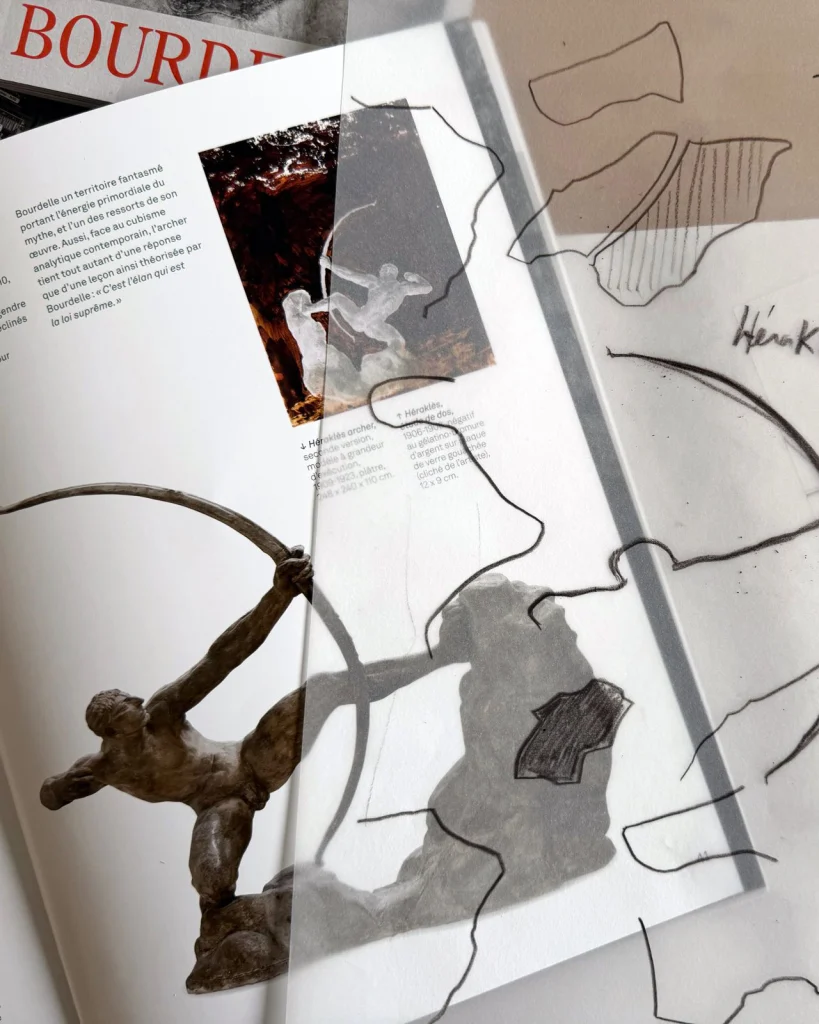
From 8 to 27 September 2026, the Musée Bourdelle hosts ‘Contrepoint’, an installation by Anthony Guerrée set within the permanent collections, for the museum’s first participation in Paris Design Week. From Antoine Bourdelle‘s sculptures, Anthony draws lines, curves and tensions — the taut arcs, the sense of construction, the signatures of a gesture — which he freely transposes into wood, glass, textile and clay.
For La Chance, the brief was clear and demanding: to bring our pieces into conversation with the work of a major sculptor, in a place that is already, in itself, a work of art. Three pieces designed by Anthony Guerrée for the house enter this dialogue — including one new creation that joins the collection.
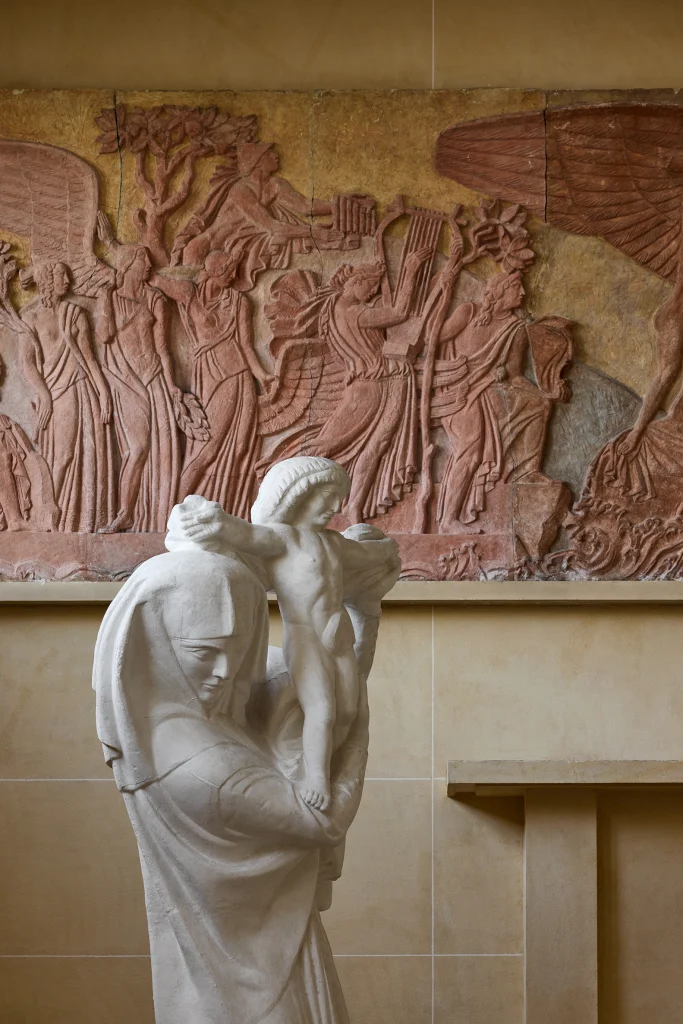
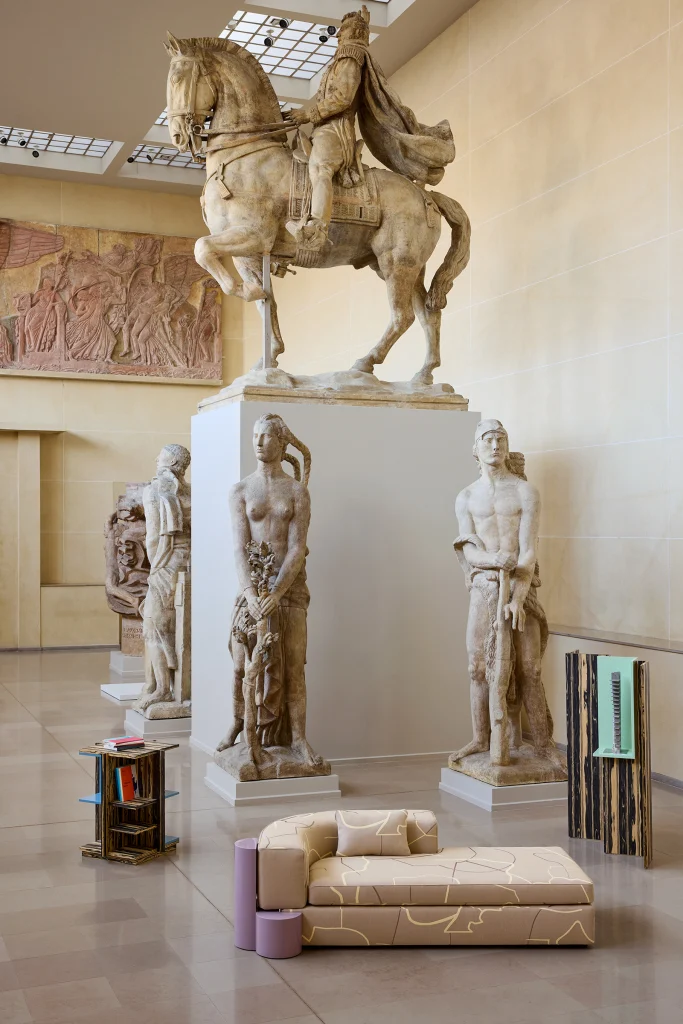
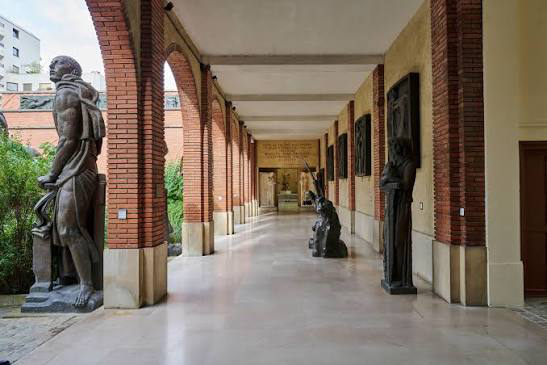
The Musée Bourdelle is an architectural millefeuille, a cluster of buildings raised between 1878 and 1992 and linked by three gardens peopled with bronzes. Late-nineteenth-century studios turned into collection rooms; a red-brick hall built in 1961 by Henri Gautruche to display the monumental plasters; a wing of geometric concrete raised by Christian de Portzamparc in 1992. In a few steps, you pass from the intimate to the grand.
That contrast is what attaches us to this place — one of our favourites in Paris. On one side, the lived-in spaces and the creation studio, relatively small, dense with presence; on the other, the vast plaster hall, gathering the plasters once used to cast the bronzes now shown in the gardens. A walk, hidden corners, a quality of light — and a design history not far from our own: thanks to the 2002 bequest of Rhodia Dufet-Bourdelle, the museum holds the furniture ensembles and archives of Michel Dufet (1888–1985), a leading figure of Art Deco. Our pieces thus resonate with a design collection already present within these walls.
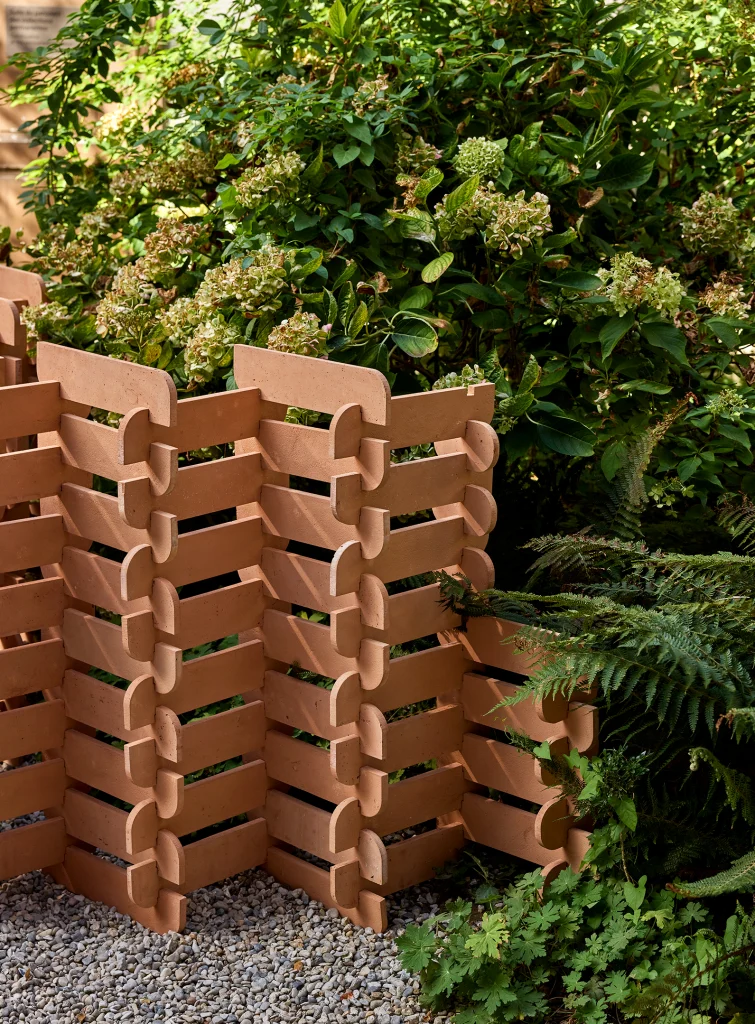
Drawing on Bourdelle’s work, Anthony Guerrée has defined a repertoire of forms — fragments of line, abstract yet deeply tied to sculptural movement. This vocabulary travels from one medium to another: it appears in the jacquard motif of the daybed as much as in the stained-glass-and-wood screens of the plaster hall.
It is the thread running through ‘Contrepoint‘, and what gives the whole its coherence: a single handwriting, declined in textile, glass, wood and clay.
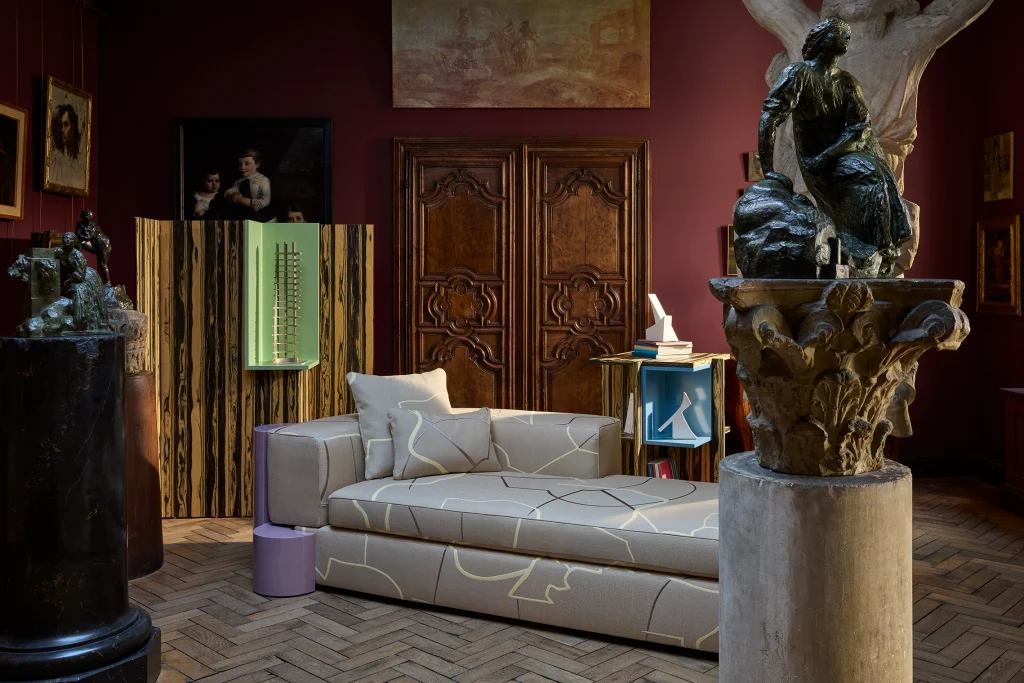
The painting studio is a place of life, more intimate, and of rare density: a great Bourdelle figure rising from floor to ceiling, a Greek head, fragments of an altarpiece, portraits of different periods and styles. A physical density, but also a density of vocabulary and texture. To this is added the colour of the walls — a wine-red, very present, very strong.
To exist in this room without dissolving into it, we chose emphatic versions of our furniture, in assertive colours. With Anthony, we built a palette that folds this wine-red into a fresher chord: a mint green, a soft blue — taken from one of the paintings in the room — and the mauve/parme found from one piece to the next.
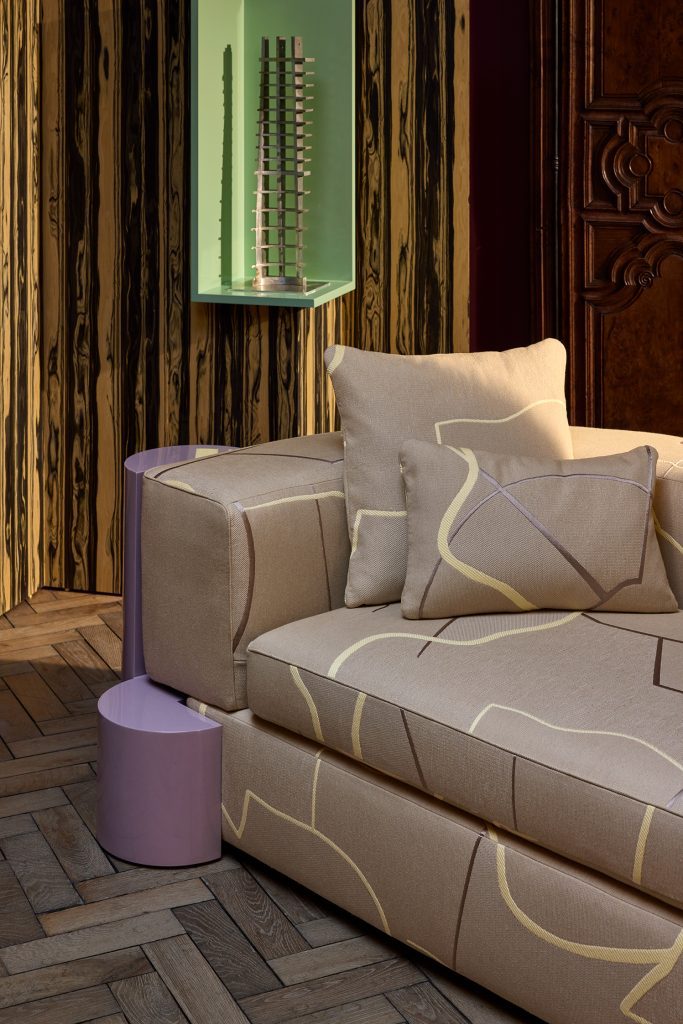
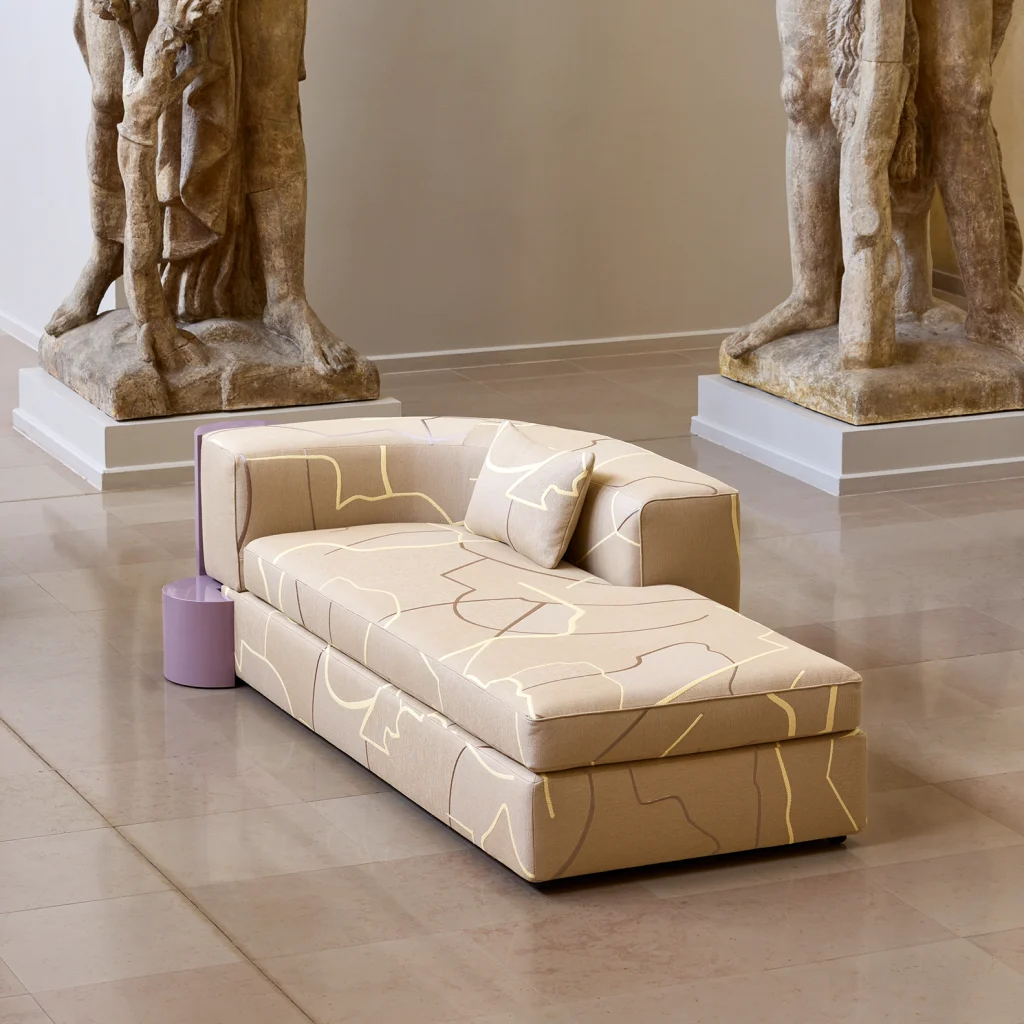
Orbe is a collection designed by Anthony Guerrée for La Chance, broad and rich in typologies: sofas, armchairs, compositions. Here we chose the daybed version — for its compactness, its sculptural quality, and because the room that welcomes it was the museum’s only domestic salon, the one where Antoine Bourdelle received guests, and where a daybed already stood at the time. Our intervention follows in that continuity: something resolutely domestic.
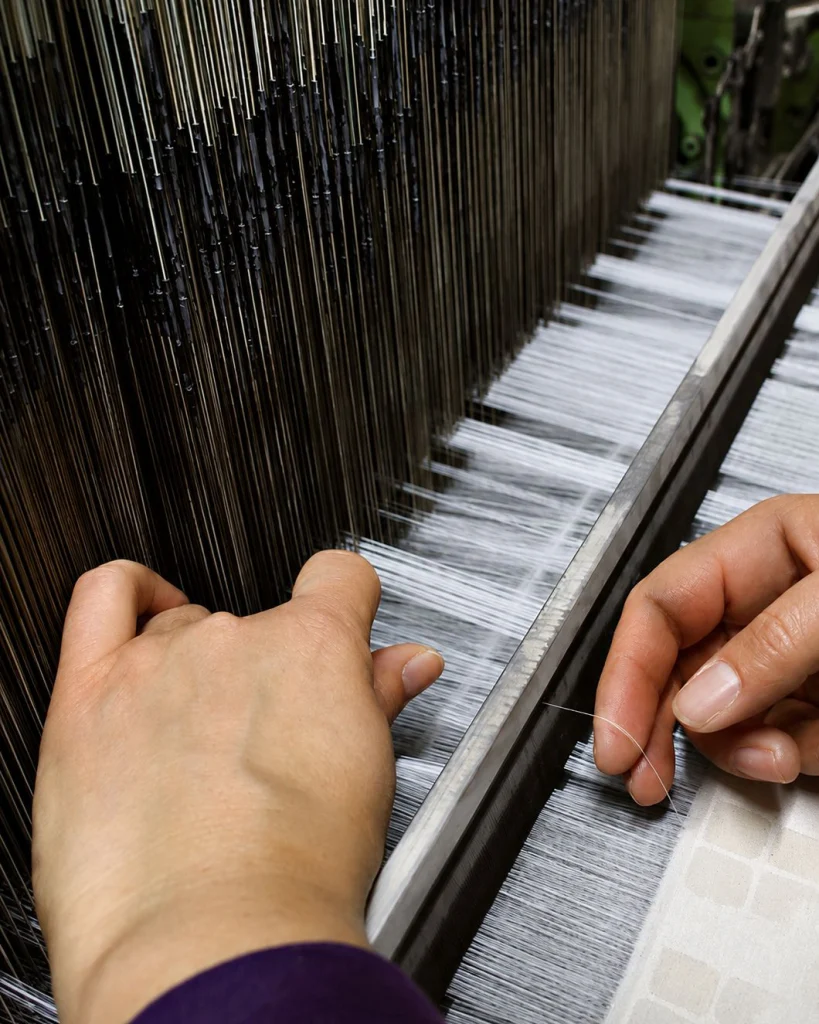
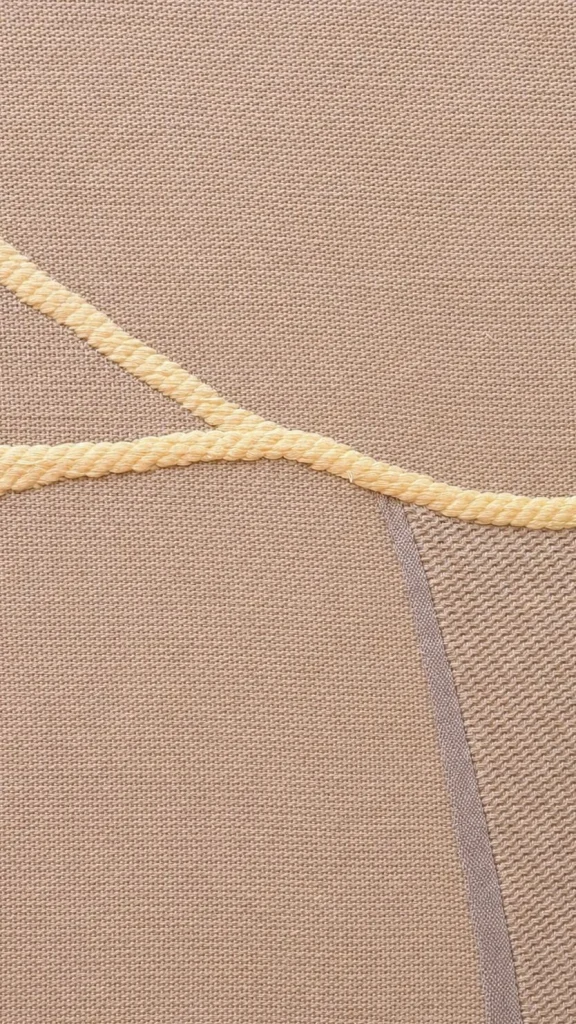
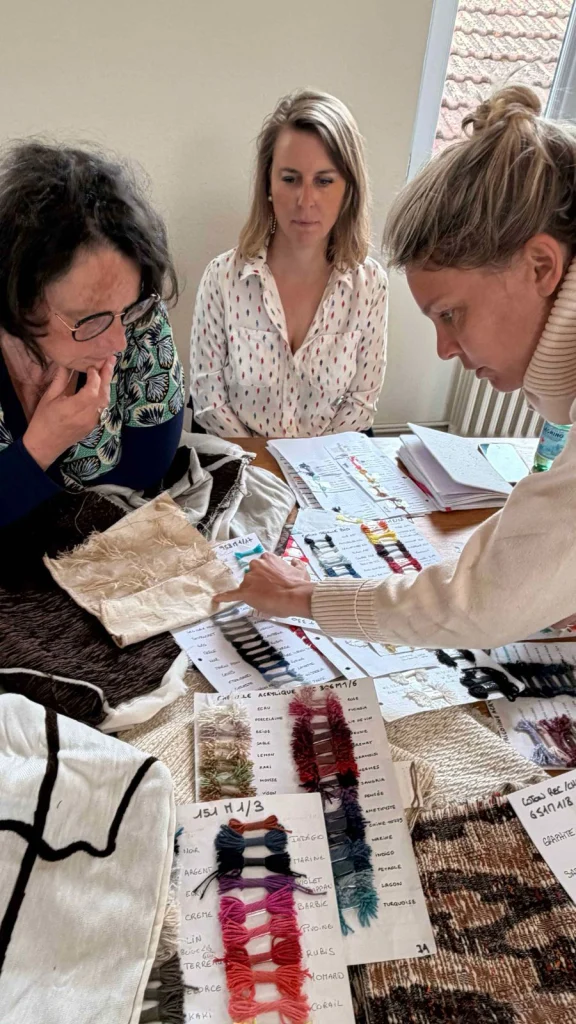
For ‘Contrepoint’, we produced a wholly special version, unique and exclusive. The fabric is a jacquard developed with Tissages de Charlieu, a centuries-old French textile house, with the technical support of Isabelle Arnardi. The motif comes straight from Anthony’s repertoire of forms drawn from Bourdelle — the taut arcs, the constructed feel — the very motif that inhabits the screens of the plaster hall. The jacquard plays on four weaves, four flat textures linked together, heightened with glossy lurex threads carrying the mauve parme, and a woollier yellow thread that adds grain. The result is a relief, a landscape effect.
A word on the craft: developed in the early nineteenth century, the jacquard technique weaves the motif into the very structure of the cloth — the fabric becomes a true field of creation. Anthony’s vocabulary of lines and forms takes shape thanks to Tissages de Charlieu, a centuries-old French house specialising in bespoke jacquard, and to the expertise of Isabelle Arnardi, who guided the development of the motif.
A detail: the “roc”, the side element of the daybed, usually in marble or in an aluminium ground, is here treated in coloured lacquer, in a parme echoing one of the threads in the fabric. A side table slips beneath the cantilever of the backrest. A piece unique in both its fabric and its colours.
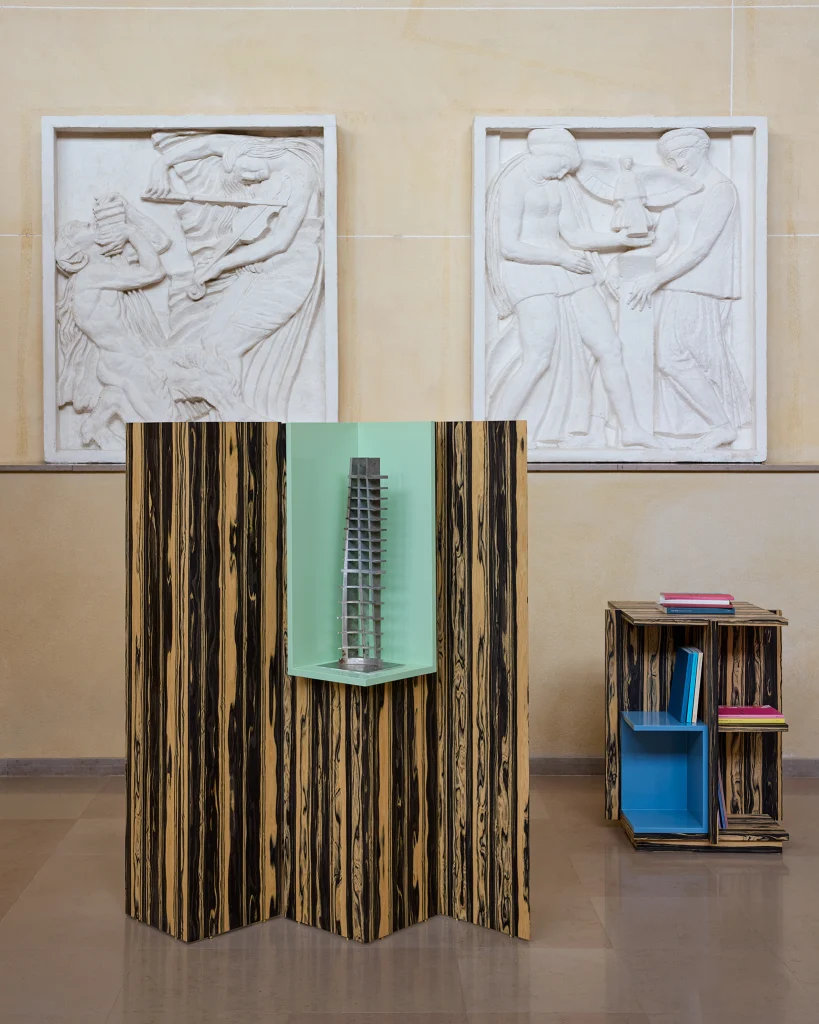
First shown with La Chance and Anthony Guerrée in 2025, the Forma screen existed in a version with a mirror-polished stainless-steel box and a very fine, gentle Japanese wood. That world would not have held its own in the painting studio. So we made a far more emphatic version, in a precious white-ebony veneer: strong contrasts, swirling grain — an impression of black smoke — and an almost striped quality that gives it an intense presence. It coexists with the room’s many woods (parquet, doors, works), bringing something precious, graphic, modern, and a real freshness that breaks with the whole.
The screen’s box — conceived as a pedestal for a sculpture, an object, a bouquet — is here in glossy green lacquer. On it we placed a manufacturing matrix from Maison Charles, the publisher of precious lighting for whom Anthony designed a lamp. This tool, normally used to bend sheets of brass, has been mounted on a base: a technical, utilitarian object whose chiselled, dynamic, perfectly proportioned beauty we wanted to underline.
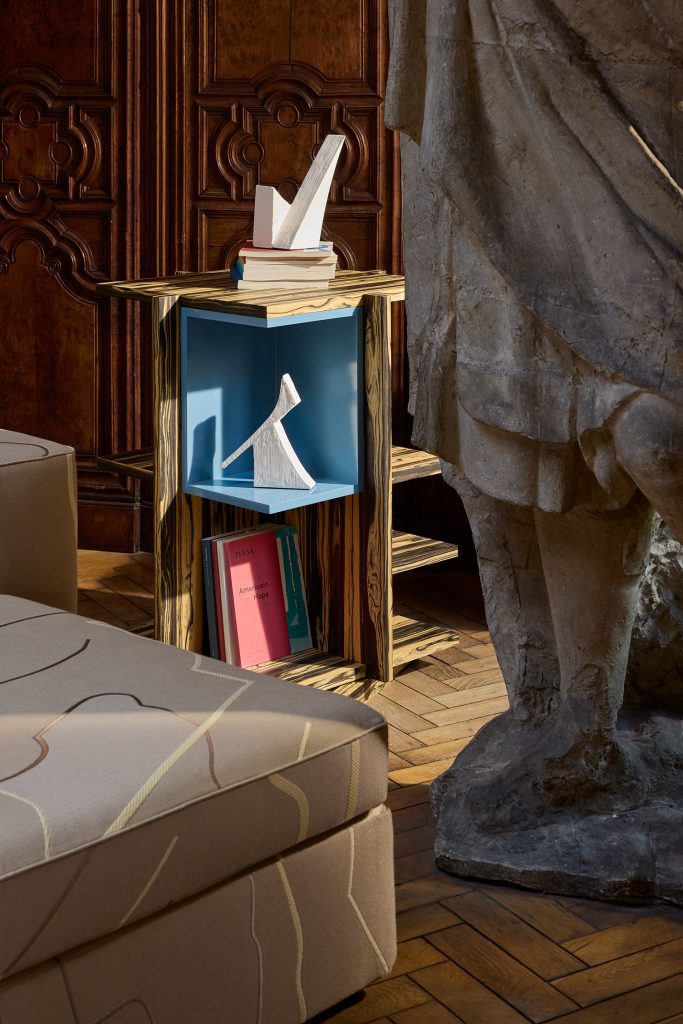
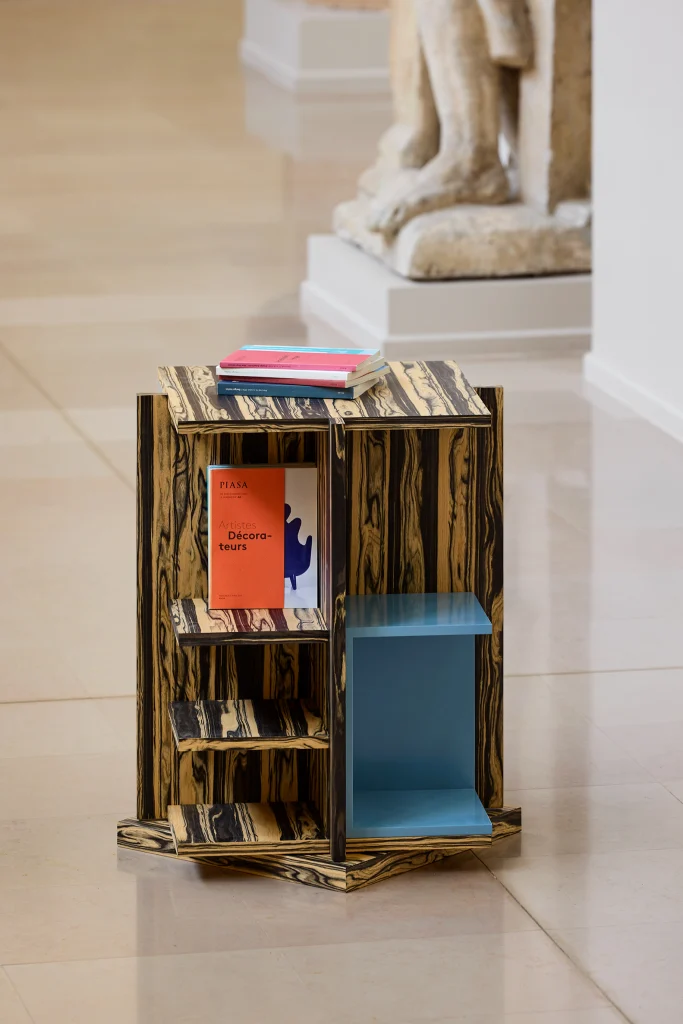
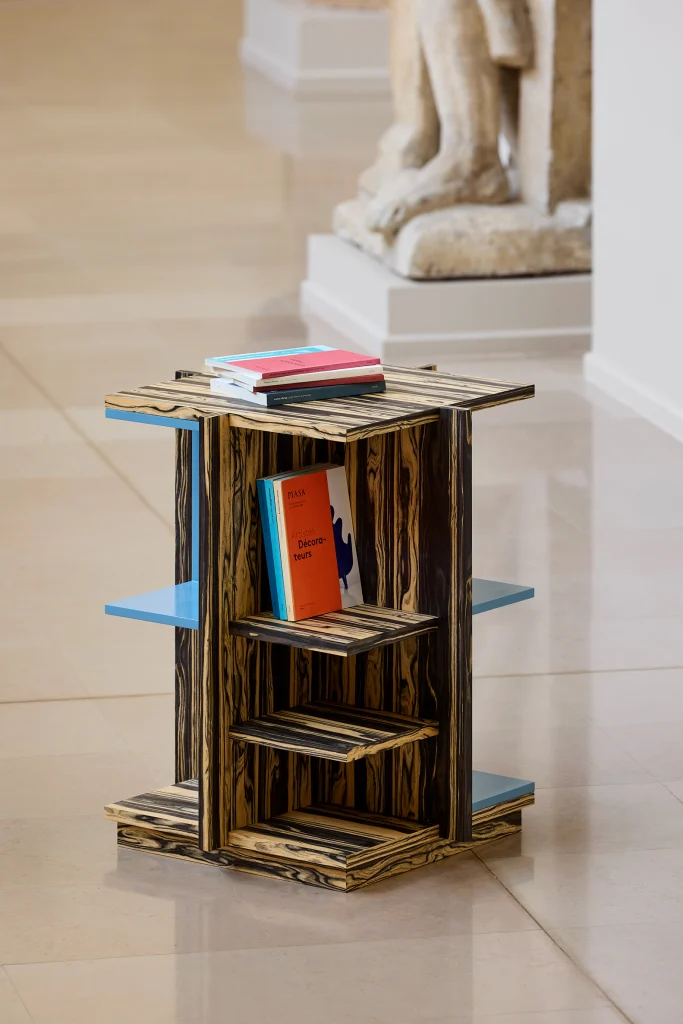
A new piece, the Forma bookcase joins the collection. Its inspiration is twofold. First a typology: the revolving bookcases found in classical interiors, which give access to books all around their perimeter. Then the principle already at work in the screen: the storage function doubles as a way of showcasing — that pedestal quality. Here too there are boxes, this time in blue lacquer.
A little over 1.15 m high, it can carry a large sculpture; and its rotation evokes the sculptor’s turntable, the stand on which a work is turned to be shaped from every side — a nod, a tribute to the gesture. Inspired by an antique piece yet wholly contemporary, it holds art books just as well as a bar, or works slipped into the two blue boxes. It creates a circulation, a concentrate of personalities that adapts to each use.
‘Contrepoint’ is a collective work. Around Anthony Guerrée, several exceptional workshops and manufactures.
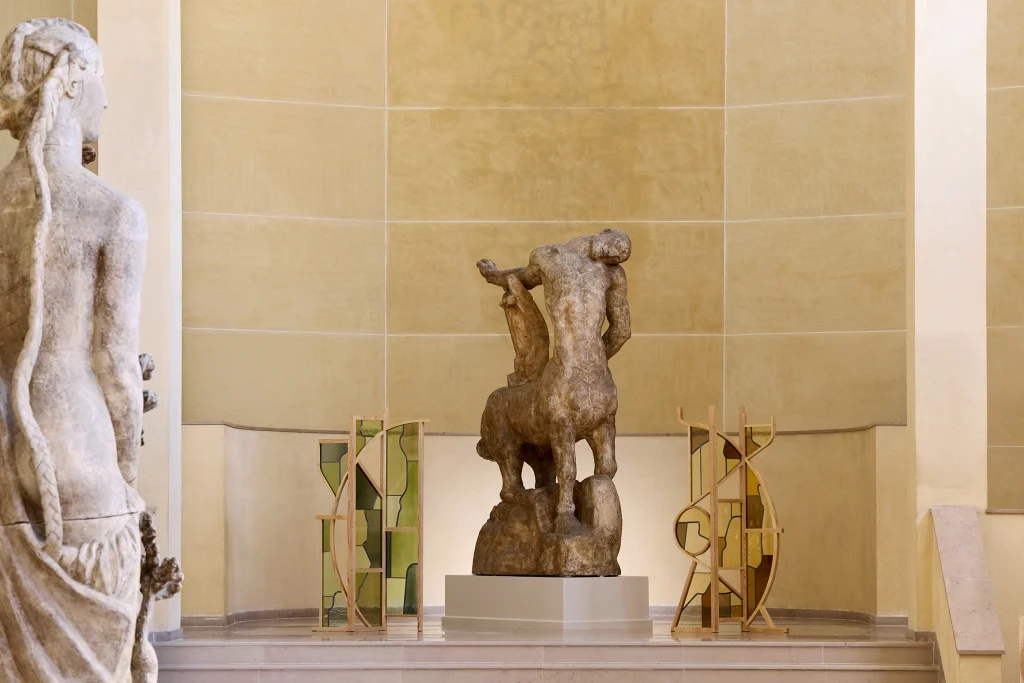
In the majestic plaster hall, four screens of stained glass and wood unfold their play of coloured light around the ‘Dying Centaur’, ‘Herakles the Archer’ and the ‘Monument to General Alvear’. The compositions arise from the same lines as our fabric — the curves and tensions drawn from Bourdelle’s sculptures — here become an architecture of light. The stained glass is signed by the Atelier Toporkoff (Sophie Toporkoff); the structures, in solid ash, are made by the joiner Louis Monier (Atelier Monier), Meilleur Ouvrier de France. A fitting return: the screen has long belonged to the repertoire of the seat-maker’s craft.
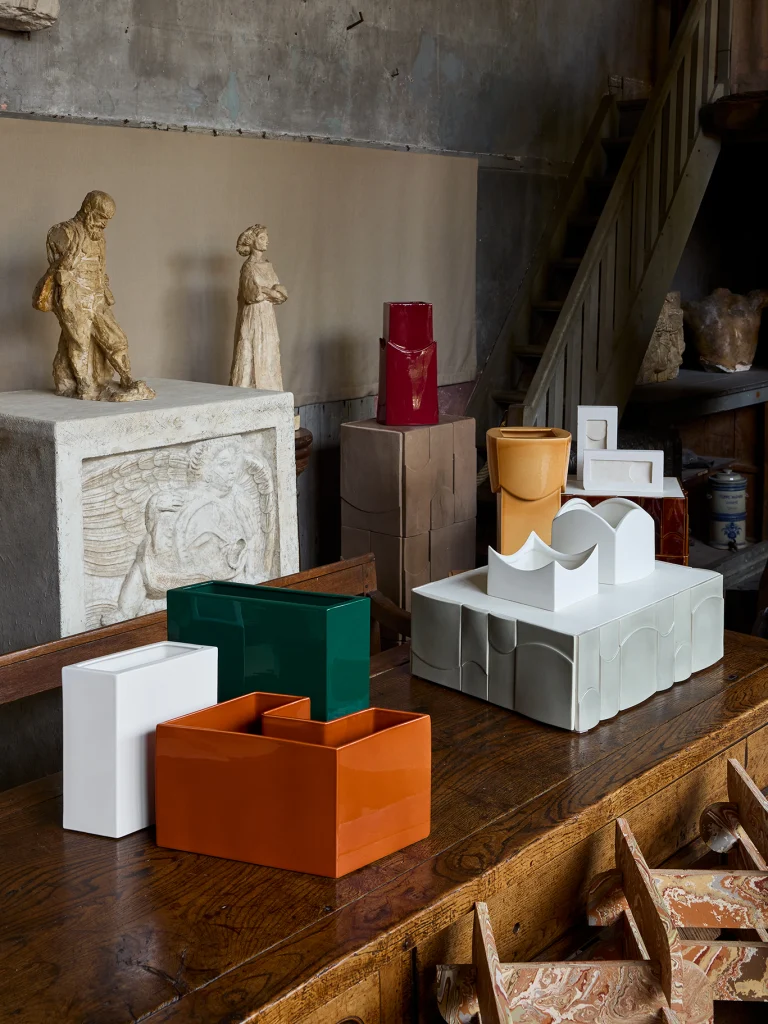
In the sculpture studio — the historic room where Bourdelle worked, with his great worktable — Anthony Guerrée pursues a research into mixed clay, conducted with the Italian manufacture Fornace Brioni. Founded in 1920 and now in its fourth generation, Fornace Brioni upholds an exceptional craft around ‘cotto’, the terracotta made from the clays of the Po plain.
Since 2025, Anthony has developed several collections there — Voluto, Vertigo, Ordo, Echo. Surfaces, modules, objects, but also moulds and matrices, shown on Bourdelle’s table like so many sculptures in negative: the memory of the gesture, the invisible stages of making. A natural dialogue with the sculptor’s work in plaster — one that extends into the museum’s inner garden.
Contrepoint installation, Musée Bourdelle, 8 – 27 September 2026, as part of Paris Design Week 2026.
Design & creation: Anthony Guerrée.
Museum director: Ophélie Ferlier-Bouat.
Project lead: Alice Massé, chief heritage curator.
La Chance × Anthony Guerrée pieces: Orbe daybed, Forma screen, Forma bookcase (new).
Partners & craftsmanship: Tissages de Charlieu (Isabelle Arnardi) · Atelier Toporkoff (stained glass) · Atelier Monier (joinery) · Maison Charles (matrix) · Fornace Brioni (cotto).
By browsing this website, you accept the use of cookies for the purpose of producing visit statistics.
I agree
We also speak English
Because it looks like you are not in France, discover our website in English:
Tell us about yourself to download the document.