HEXA 67
JOSEPH-ANDRÉ MOTTE
coffee table
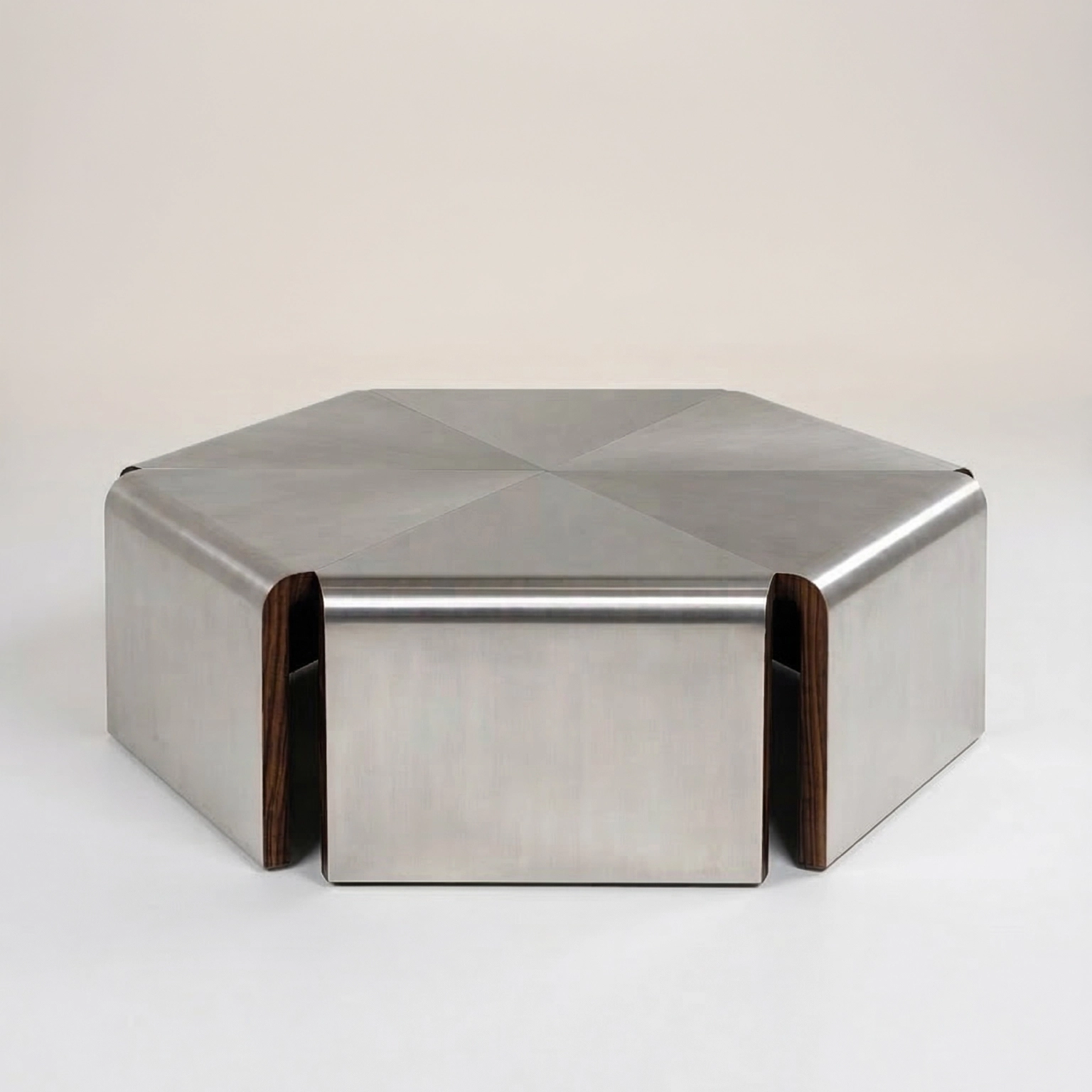
The HEXA 67 table by Joseph-André Motte is being reissued for the first time by La Chance in collaboration with the Mobilier National, based on a prototype crafted within the Atelier de Recherche et de Création (ARC) in 1967.

HEXA 67
The table currently produced under the name Hexa 67 corresponds to the model cataloged by the Mobilier national under inventory number GMC 26.
Designed in 1967 by Joseph-André Motte and crafted by the Atelier de Recherche et Création (ARC), it belongs to a set of prestige furniture intended for official representation, alongside a stainless steel executive desk.
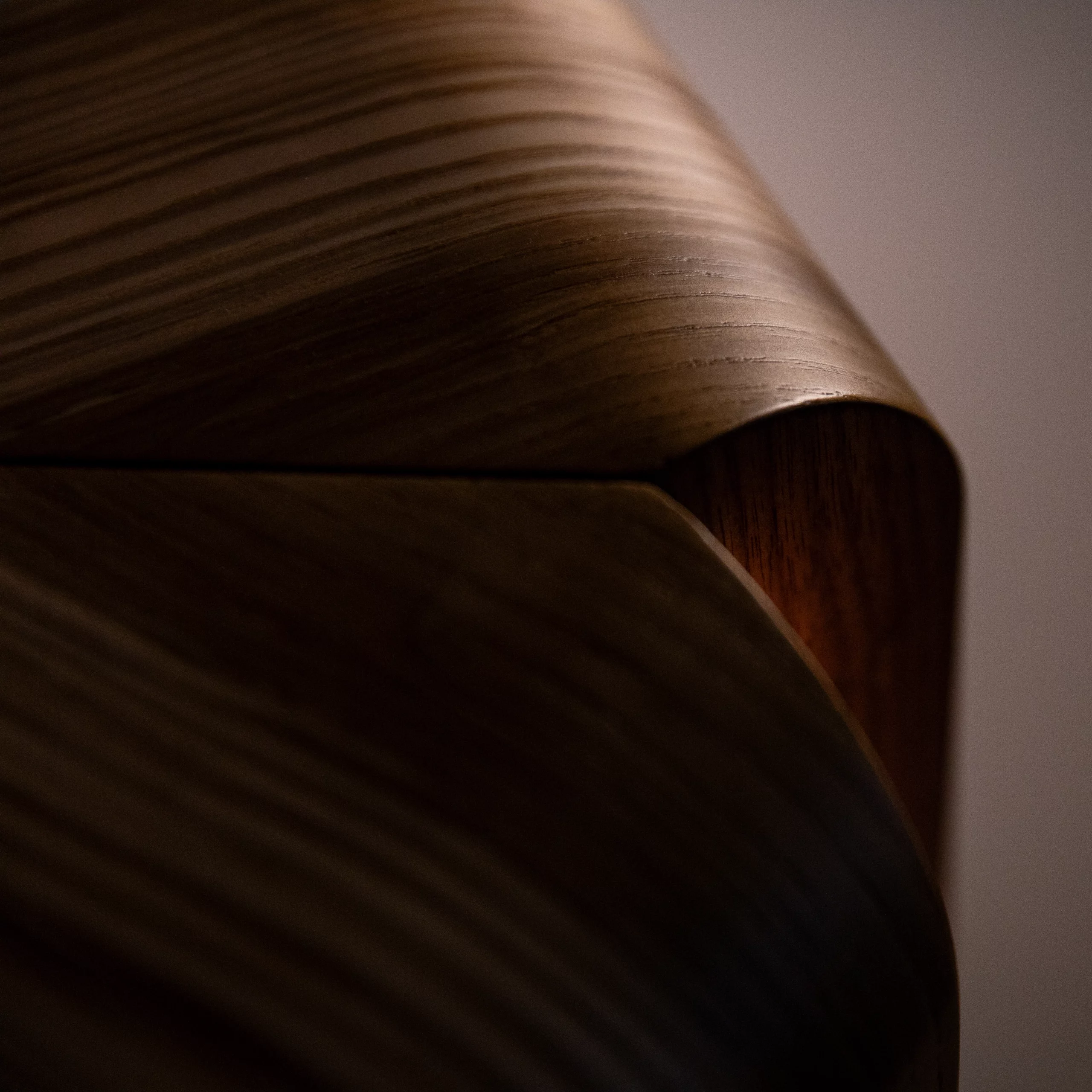
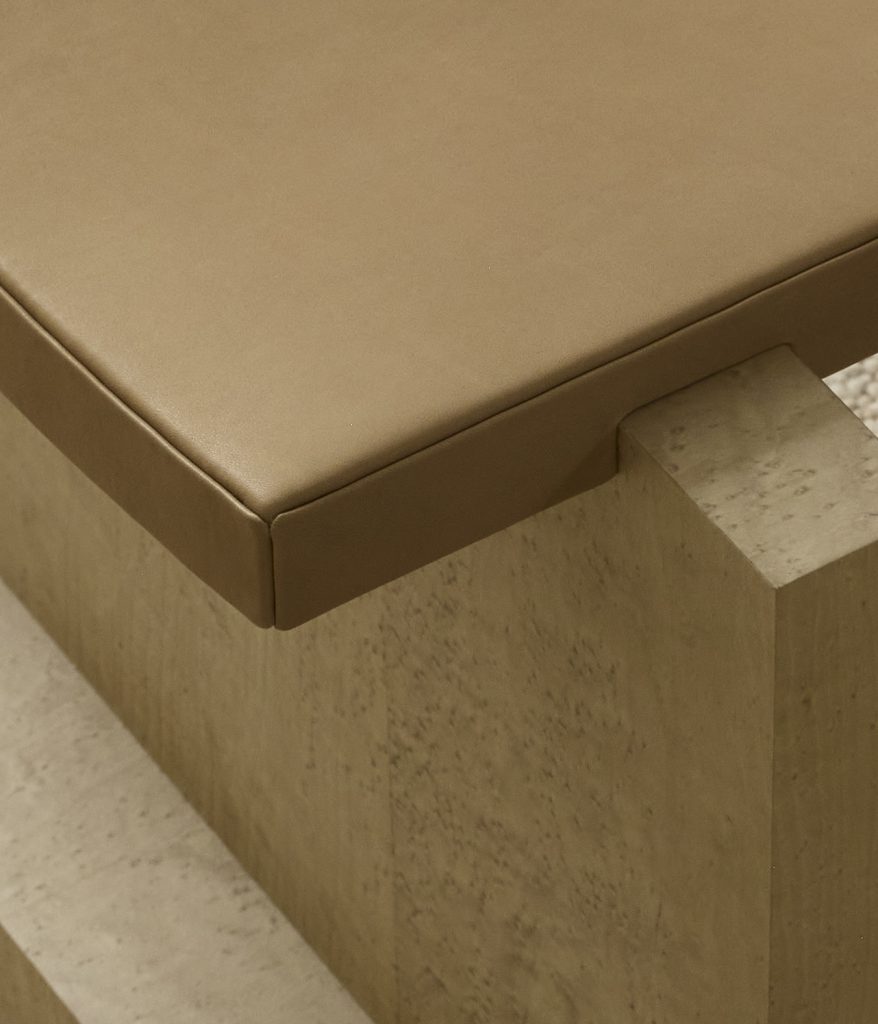
Its design is strikingly self-evident: a hexagon. Yet, this apparent simplicity relies on a sophisticated construction. The table is composed of six triangular elements whose rounded downward returns form the base: the top and the base are not simply added together; they respond to each other as a single volume.
JOSEPH-ANDRÉ MOTTE
THE DESIGNER
Born in 1925, Joseph-André Motte belongs to the generation that firmly established French modernism in the post-war era. He arrived in Paris to study at the Arts Appliqués, then began his career in the major workshops and creative networks of the time, at the crossroads of interior design, furniture publishing, and serial production. Very early on, he championed a simple principle: clear design, constant attention to materials, and a modernism expressed as much through construction as through form.
His career unfolded across two complementary fields. On one hand, major public and institutional projects: the interior design of Orly airport, followed by the Maison de la Radio, and later, participation in the interior design of Roissy-Charles-de-Gaulle within the vast project led by Paul Andreu. On the other, a body of work in direct contact with everyday life: his contribution to the Paris Metro, in the so-called Motte-Andreu style, combined rationality (white tiling, lighting fixtures) with a precise use of color to enhance the station experience.
When Joseph-André Motte collaborated with the Mobilier National and the ARC in 1967, he applied this same rigor to official prestige furniture: a sober, demanding, and lasting modernism—designed to endure over the long timespan of institutions.
A FRENCH MODERNISM
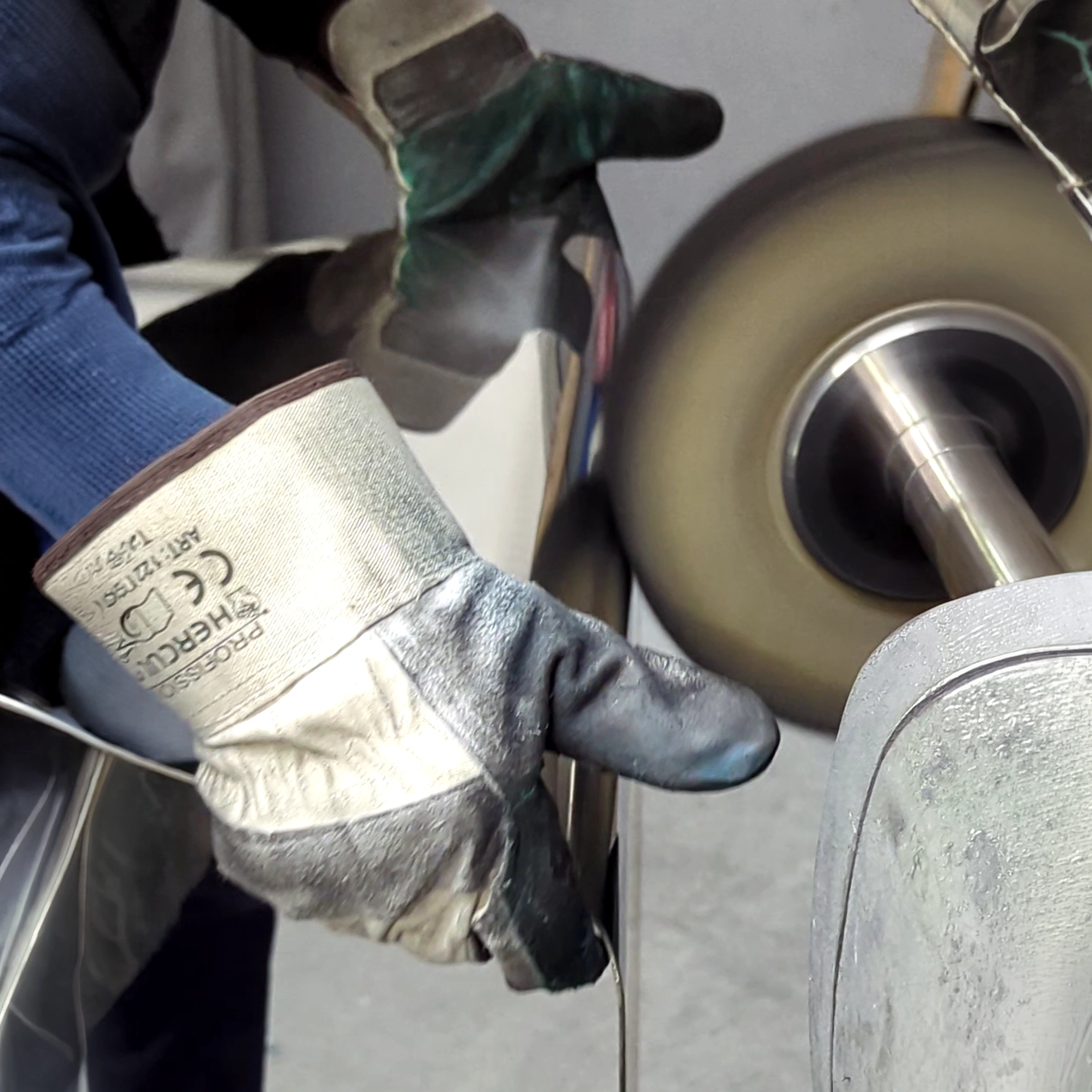
The historical version of the table pairs stainless steel with Macassar ebony edges, where the materials contribute as much to the structure as they do to the overall appearance. This material ambition required a genuine development effort: for the stainless steel models, the ARC workshops had to manufacture custom tools, as traditional cabinetmaking tools were unsuited to the hardness of the metal.
The history of this commission is anchored in the context of the public exhibitions of the era, notably the Salon des Artistes Décorateurs: a moment when craftsmanship, industry, and state commissions converged to produce a French modernism that was both sober and demanding.
REVIVING A DESIGN
The reissue of the Hexa 67 table is based on documented research, faithful to the original project.
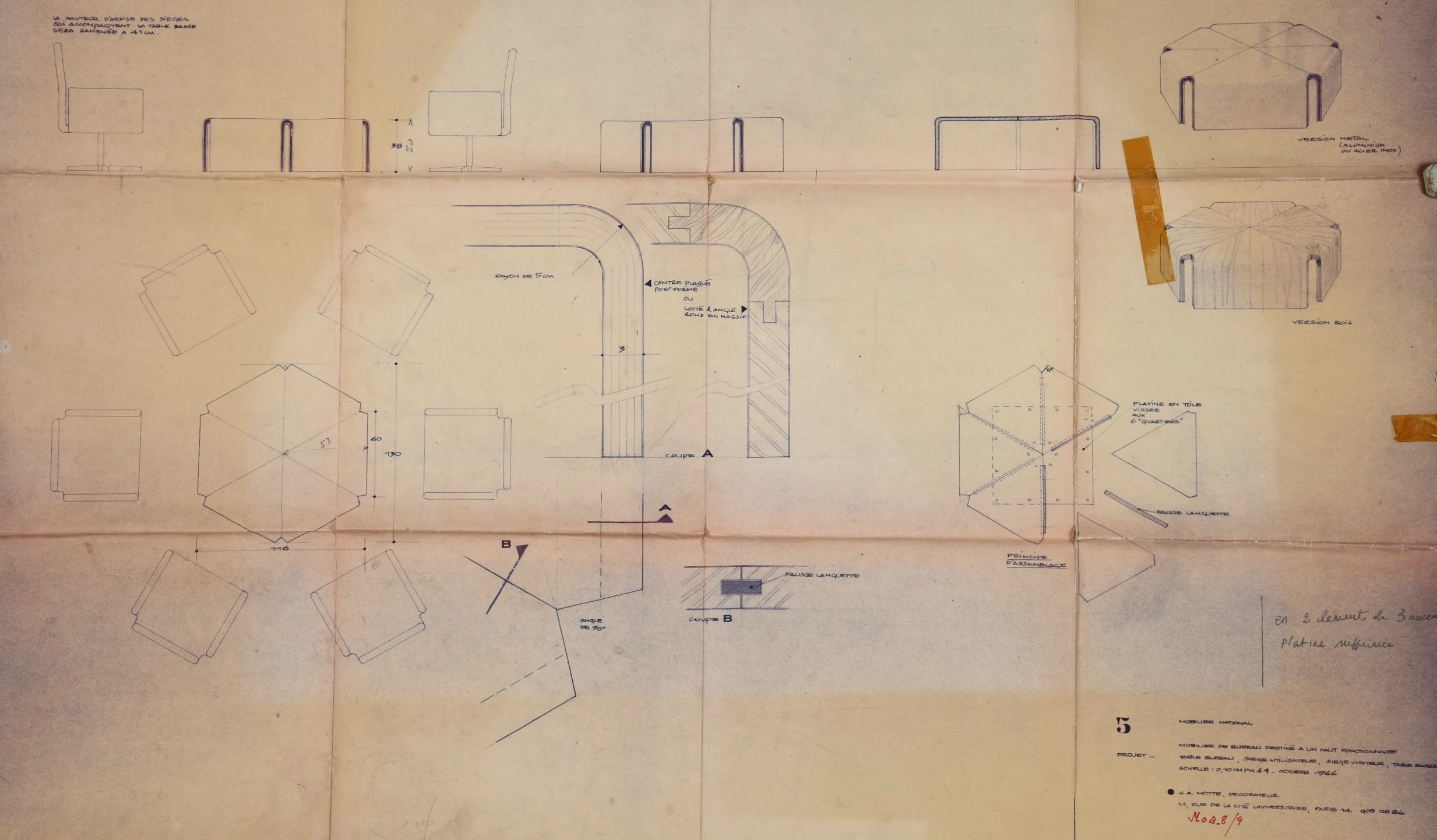
The reissuing process allows for a return to the structural logic set forth in the original documents. The blueprints describe a table composed of six elements; the contemporary edition replicates this six-part construction.
The piece crafted in 1967 adopted a different manufacturing approach, built in two main assemblies, while still preserving the overall reading of the design.
Technical drawings of the Hexa 67
Mobilier national archives, 1967